
| Namaz | Time | Jamaat |
|---|---|---|
| Fajr | 6:01 AM | 6:30 AM |
| Sunrise | 7:36 AM | |
| Zuhr | 12:50 PM | 1:15 PM |
| Asr | 3:19 PM | 3:45 PM |
| Maghrib | 5:53 PM | 5:53 PM |
| Isha | 7:18 PM | 7:45 PM |
| Jum'ah | 1:15 PM | 1:45 PM |

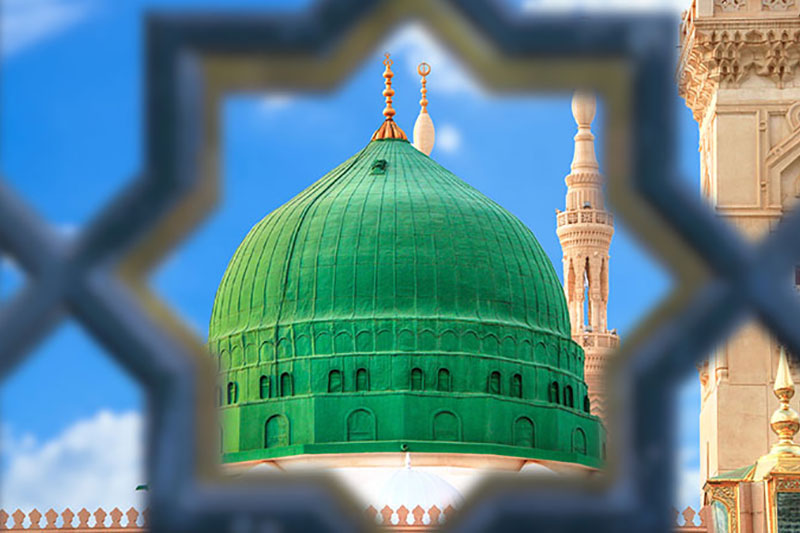
The words Muslim and Islam both come from an Arabic word which means Submission and Peace.
Islam literally means achieving peace with oneself and one’s environment through submission to God. Islam can be looked at as “GOD’S RELIGION”, as it is essentially a continuation and perfection of the previous monotheistic teachings since Adam (Peace & Blessing be Upon him PBUH)).
Abraham, father of all prophets, is the first Muslim. Islam is also a code for social conduct. Islam provides a comprehensive concept to humanity’s eternal question: who are we? Islam is a comprehensive and balanced system of life encompassing the spiritual and the temporal realms.
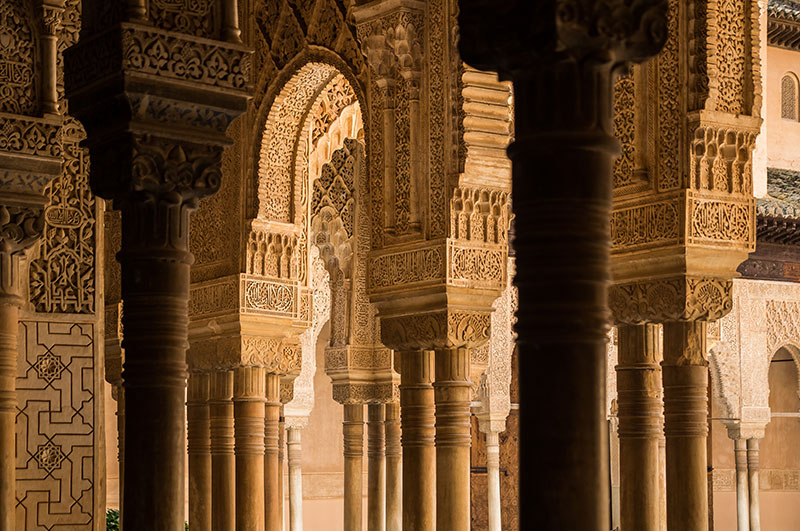
The framework for Muslim Life is built around five essential practices
1. Belief & the declaration of faith (Shahadah): “There is no deity but God, and Muhammad is the messenger of God” (Shahadah) to testify to the oneness of Allah and to testify that Muhammad is a Messenger from Allah
2. Prayer (Salaat): Every day has five obligatory prayers. In addition there are no limits on voluntary prayers or other forms of worship. Prayer requires being in a clean physical state before each prayer so people will wash themselves ritually (wudu). There is no mass service or priesthood and so the Imam serves only as a unifying reciter during prayer. The link between the individual and God in prayer is always there and requires no Imam to make the link.
3. Almsgiving (Zakat): The word zakat literally translates to ‘purification by setting aside’. This is an annual donation of 2.5% of a person’s unused wealth, given for the needy. In addition there are no limits to further voluntary donation known as ‘sadaqa’.
4. Fasting in Ramadan (Siyam): This involves refraining from food, drink and intimate relations from sunrise to sunset in the holy month of Ramadan (9th month of the Islamic Calendar)
5. Pilgrimage (Hajj): The pilgrimage to Makkah (Hajj) is a once in a lifetime action for those who can afford it financially and physically.
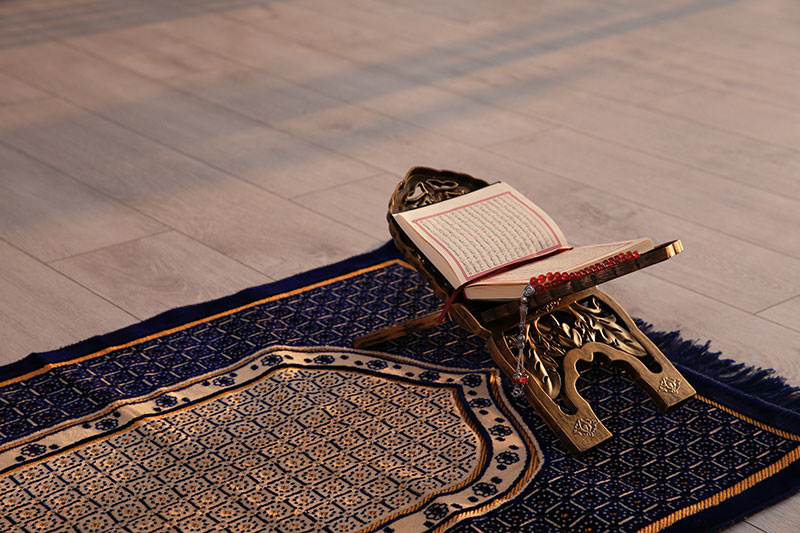
The five daily prayers are to keep in contact with Allah. Prayers involve ablution, standing, bowing, prostrating, sitting postures, followed by personal invocations Muslim face a common prayer direction (Qiblah) towards the Kaabah in Makkah. Prayers can be said alone or in congregation. On Fridays congregational prayers preceded by a sermon are mandatory for men.
The five daily prayers are:
There are additional voluntary prayers as well as are prayers for special occasions
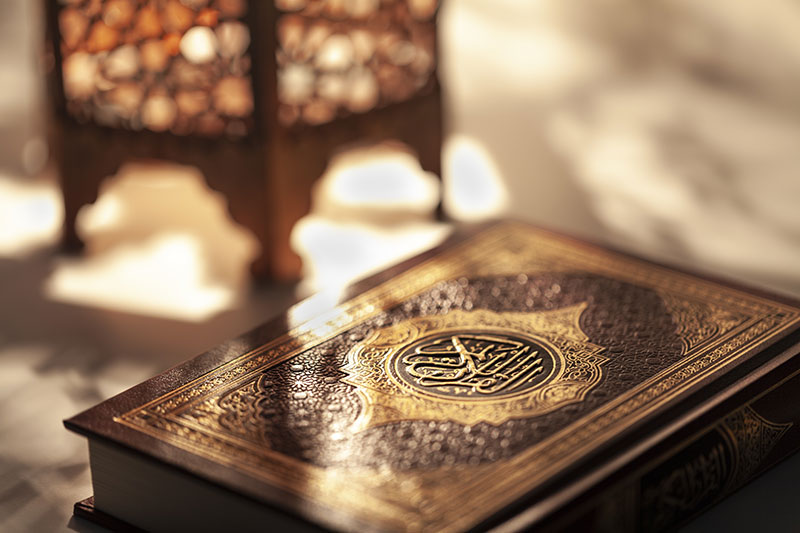
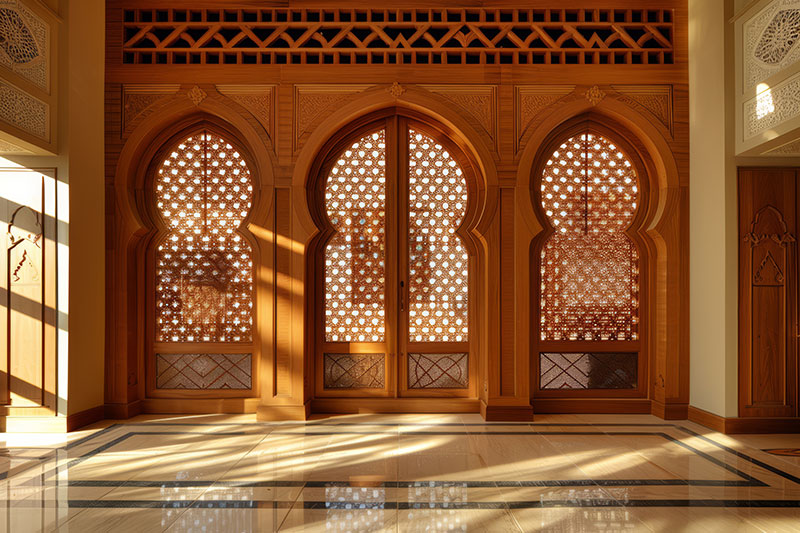
Mosques do not contain statues or images. Calligraphy and arabesque geometric designs beautify the mosque interior. There are no seats and no reserved places.
Before entering, worshippers remove their shoes to retain the cleanliness of the space for prayer. As people must ritually wash before prayer washing facilities are always attached to the mosque
The mosque also serves as a cultural, educational and spiritual centre for the local community

Everybody above the poverty threshold must pay 2.5% of surplus wealth (not income) for the benefit of the needy annually. The wealth can be in in the form of money, precious metals, goods and other valuable items which have not been used in a year.
Other optional charity can be given at any time but the concept of Zakat ensures an awareness of social obligation and prevents hoarding of wealth.
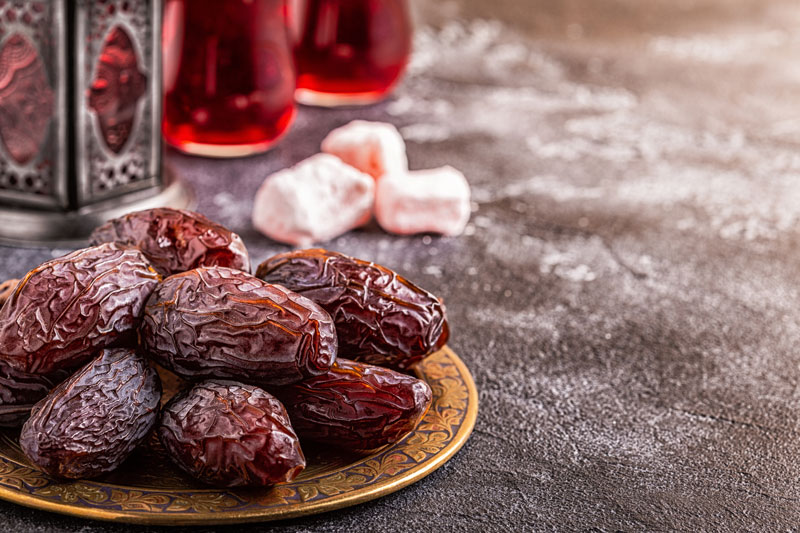
Ramadan is the 9th month in the Islamic Lunar calendar and thus starts 10 days earlier every year of the solar calendar.
During this month, healthy adults abstain from food and drink and marital relations from dawn to sunset.
Fasting helps focus the mind, teaches self-control and increases the awareness of God.
Fasting can strain the body, so as a mercy from God, children, the sick and women on their monthly cycles are excused from fasting.
At the end of Ramadan, the Eid ul-Fitr holiday is celebrated firstly by giving charity and congregational prayer, after which people celebrate with friends and family.
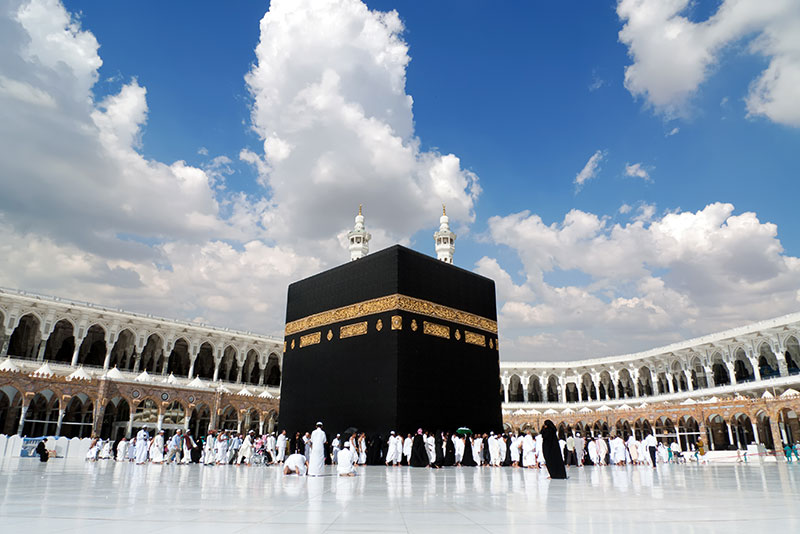
A pilgrimage to Makkah should occur once in a lifetime for able Muslims during the last month of the Muslim calendar.
About 2-3 million Muslims perform Hajj each year from all over the world. It is a journey of repentance and solidifying one’s covenant with God. The Hajj rituals begin and end in Makkah (Kaaba). Its climax is standing on Mount Arafat on the 9th day, wrapped in only 2 white garments. All people standing there appear the same.
Most of the Hajj rituals follow in the footsteps of Abraham (PBUH), to which he was guided by Allah.
A lesser pilgrimage (Umrah) can occur any time during the year in Makkah, in the vicinity of Kaaba.
Eid ul-Adha: the major Muslim holiday celebrated by those not on Hajj on the 10th of the month of Dhul Hijjah. It starts with a congregational prayer followed by sacrifice, food distribution and celebrations.
The words Muslim and Islam both come from an Arabic word which means Submission and Peace.
Islam literally means achieving peace with oneself and one’s environment through submission to God. Islam can be looked at as “GOD’S RELIGION”, as it is essentially a continuation and perfection of the previous monotheistic teachings since Adam (Peace & Blessing be Upon him PBUH)).
Abraham, father of all prophets, is the first Muslim. Islam is also a code for social conduct. Islam provides a comprehensive concept to humanity’s eternal question: who are we? Islam is a comprehensive and balanced system of life encompassing the spiritual and the temporal realms.
The framework for Muslim Life is built around five essential practices
1. Belief & the declaration of faith (Shahadah): “There is no deity but God, and Muhammad is the messenger of God” (Shahadah) to testify to the oneness of Allah and to testify that Muhammad is a Messenger from Allah
2. Prayer (Salaat): Every day has five obligatory prayers. In addition there are no limits on voluntary prayers or other forms of worship. Prayer requires being in a clean physical state before each prayer so people will wash themselves ritually (wudu). There is no mass service or priesthood and so the Imam serves only as a unifying reciter during prayer. The link between the individual and God in prayer is always there and requires no Imam to make the link.
3. Almsgiving (Zakat): The word zakat literally translates to ‘purification by setting aside’. This is an annual donation of 2.5% of a person’s unused wealth, given for the needy. In addition there are no limits to further voluntary donation known as ‘sadaqa’.
4. Fasting in Ramadan (Siyam): This involves refraining from food, drink and intimate relations from sunrise to sunset in the holy month of Ramadan (9th month of the Islamic Calendar)
5. Pilgrimage (Hajj): The pilgrimage to Makkah (Hajj) is a once in a lifetime action for those who can afford it financially and physically.
The five daily prayers are to keep in contact with Allah. Prayers involve ablution, standing, bowing, prostrating, sitting postures, followed by personal invocations Muslim face a common prayer direction (Qiblah) towards the Kaabah in Makkah. Prayers can be said alone or in congregation. On Fridays congregational prayers preceded by a sermon are mandatory for men.
The five daily prayers are:
There are additional voluntary prayers as well as are prayers for special occasions
Mosques do not contain statues or images. Calligraphy and arabesque geometric designs beautify the mosque interior. There are no seats and no reserved places.
Before entering, worshippers remove their shoes to retain the cleanliness of the space for prayer. As people must ritually wash before prayer washing facilities are always attached to the mosque
The mosque also serves as a cultural, educational and spiritual centre for the local community
Everybody above the poverty threshold must pay 2.5% of surplus wealth (not income) for the benefit of the needy annually. The wealth can be in in the form of money, precious metals, goods and other valuable items which have not been used in a year.
Other optional charity can be given at any time but the concept of Zakat ensures an awareness of social obligation and prevents hoarding of wealth.
Ramadan is the 9th month in the Islamic Lunar calendar and thus starts 10 days earlier every year of the solar calendar.
During this month, healthy adults abstain from food and drink and marital relations from dawn to sunset.
Fasting helps focus the mind, teaches self-control and increases the awareness of God.
Fasting can strain the body, so as a mercy from God, children, the sick and women on their monthly cycles are excused from fasting.
At the end of Ramadan, the Eid ul-Fitr holiday is celebrated firstly by giving charity and congregational prayer, after which people celebrate with friends and family.
A pilgrimage to Makkah should occur once in a lifetime for able Muslims during the last month of the Muslim calendar.
About 2-3 million Muslims perform Hajj each year from all over the world. It is a journey of repentance and solidifying one’s covenant with God. The Hajj rituals begin and end in Makkah (Kaaba). Its climax is standing on Mount Arafat on the 9th day, wrapped in only 2 white garments. All people standing there appear the same.
Most of the Hajj rituals follow in the footsteps of Abraham (PBUH), to which he was guided by Allah.
A lesser pilgrimage (Umrah) can occur any time during the year in Makkah, in the vicinity of Kaaba.
Eid ul-Adha: the major Muslim holiday celebrated by those not on Hajj on the 10th of the month of Dhul Hijjah. It starts with a congregational prayer followed by sacrifice, food distribution and celebrations.
The words Muslim and Islam both come from an Arabic word which means Submission and Peace.
Islam literally means achieving peace with oneself and one’s environment through submission to God. Islam can be looked at as “GOD’S RELIGION”, as it is essentially a continuation and perfection of the previous monotheistic teachings since Adam (Peace & Blessing be Upon him PBUH)).
Abraham, father of all prophets, is the first Muslim. Islam is also a code for social conduct. Islam provides a comprehensive concept to humanity’s eternal question: who are we? Islam is a comprehensive and balanced system of life encompassing the spiritual and the temporal realms.
The framework for Muslim Life is built around five essential practices
1. Belief & the declaration of faith (Shahadah): “There is no deity but God, and Muhammad is the messenger of God” (Shahadah) to testify to the oneness of Allah and to testify that Muhammad is a Messenger from Allah
2. Prayer (Salaat): Every day has five obligatory prayers. In addition there are no limits on voluntary prayers or other forms of worship. Prayer requires being in a clean physical state before each prayer so people will wash themselves ritually (wudu). There is no mass service or priesthood and so the Imam serves only as a unifying reciter during prayer. The link between the individual and God in prayer is always there and requires no Imam to make the link.
3. Almsgiving (Zakat): The word zakat literally translates to ‘purification by setting aside’. This is an annual donation of 2.5% of a person’s unused wealth, given for the needy. In addition there are no limits to further voluntary donation known as ‘sadaqa’.
4. Fasting in Ramadan (Siyam): This involves refraining from food, drink and intimate relations from sunrise to sunset in the holy month of Ramadan (9th month of the Islamic Calendar)
5. Pilgrimage (Hajj): The pilgrimage to Makkah (Hajj) is a once in a lifetime action for those who can afford it financially and physically.
The five daily prayers are to keep in contact with Allah. Prayers involve ablution, standing, bowing, prostrating, sitting postures, followed by personal invocations Muslim face a common prayer direction (Qiblah) towards the Kaabah in Makkah. Prayers can be said alone or in congregation. On Fridays congregational prayers preceded by a sermon are mandatory for men.
The five daily prayers are:
There are additional voluntary prayers as well as are prayers for special occasions
Everybody above the poverty threshold must pay 2.5% of surplus wealth (not income) for the benefit of the needy annually. The wealth can be in in the form of money, precious metals, goods and other valuable items which have not been used in a year.
Other optional charity can be given at any time but the concept of Zakat ensures an awareness of social obligation and prevents hoarding of wealth.
Ramadan is the 9th month in the Islamic Lunar calendar and thus starts 10 days earlier every year of the solar calendar.
During this month, healthy adults abstain from food and drink and marital relations from dawn to sunset.
Fasting helps focus the mind, teaches self-control and increases the awareness of God.
Fasting can strain the body, so as a mercy from God, children, the sick and women on their monthly cycles are excused from fasting.
At the end of Ramadan, the Eid ul-Fitr holiday is celebrated firstly by giving charity and congregational prayer, after which people celebrate with friends and family.
A pilgrimage to Makkah should occur once in a lifetime for able Muslims during the last month of the Muslim calendar.
About 2-3 million Muslims perform Hajj each year from all over the world. It is a journey of repentance and solidifying one’s covenant with God. The Hajj rituals begin and end in Makkah (Kaaba). Its climax is standing on Mount Arafat on the 9th day, wrapped in only 2 white garments. All people standing there appear the same.
Most of the Hajj rituals follow in the footsteps of Abraham (PBUH), to which he was guided by Allah.
A lesser pilgrimage (Umrah) can occur any time during the year in Makkah, in the vicinity of Kaaba.
Eid ul-Adha: the major Muslim holiday celebrated by those not on Hajj on the 10th of the month of Dhul Hijjah. It starts with a congregational prayer followed by sacrifice, food distribution and celebrations.
Islam is founded on six core beliefs, which include belief in one God, angels, scriptures, messengers, predestination, and the Hereafter.

There is only one God, known as Allah in Arabic. In Hebrew texts, He is referred to as Eloh (or Elohim in a respectful tone). The central message of all God’s messengers is the affirmation of the Singularity of God, and each messenger brought teachings most relevant to their time and era.
Allah is one and indivisible—He is not a body, has no partner, counterpart, or wife. He is eternal, meaning He was never born and will never die. He has no children or offspring. As the Creator of everything, He knows all, has absolute power, and alone is worthy of worship.
Allah has no beginning to His existence; He created everything, including every movement, every moment of rest, every thought, and every intention. Likewise, He has no end, for an end signifies weakness, and the Creator is never weak. Allah is completely independent and does not need any of His creations, while they are entirely dependent on Him.
“Say: He is God, the One and Only; God, the Eternal, Absolute; He begets not, nor is He begotten; And there is none equivalent to Him.” (The Quran, Surah 112)

Belief in the unseen is fundamental to Islam. Part of the belief in the unseen is the existence of other forms of creation (the angels made from light; the Jinn (spirits, demons) made from the essence of fire.
All angels have assigned tasks and are numerous. To emphasise the number of angels, it is said that every leaf on every tree will have an angel assigned to report back that it has completed its life and fallen from the tree.
Some angels have specific significant tasks. The four major archangels in the Islamic tradition are
Personally, for each human, there are assigned two angels who record all deeds throughout the individual’s life.

The Qur’an is the holy book of Islam, revealed by God to His messenger Prophet Muhammad (PBUH) over 23 years, first in Makkah and later in Madinah. It confirms many of the prophets and narratives found in Jewish and Christian traditions while also introducing others. The Qur’an mentions 24 prophets and messengers by name, highlighting their experiences with their people, but does not name any of the Prophet’s family or companions. The Virgin Mary (Mariyam) holds a unique status in the Qur’an as the only woman mentioned by name, with an entire chapter (Surah 19) dedicated to her, an honour not given to any of the Prophet’s wives or daughters.
The Qur’an was both memorised and written down, and today’s copies are identical to those from the time of revelation. It consists of 114 chapters (Surahs) divided into verses (Ayahs). Many Tafseer (interpretations/commentaries) help explain its meanings by considering historical, linguistic, and contextual aspects. The Prophet Muhammad (PBUH) did not prescribe a single Tafseer, leaving it open for scholars to interpret across different times and places. While translations and interpretations exist for personal understanding, they are not considered authoritative. The Qur’an is always recited in Arabic during prayer, preserving its original language and pronunciation.

Throughout history, Allah sent messengers & prophets to humans on earth to show them the way to him and how to worship him.
A messenger is a prophet who reminds people of Allah, urges them to be virtuous, do good, and refrain from sin and wickedness.
He comes with new legislations and rules of conduct to complement those of previous messengers in a sacred book or holy scriptures of divine revelations (e.g. Torah revealed to Moses, Gospel to Jesus, Qur’an to Muhammad).
A prophet is someone who also receives divine revelations and prompts people to adhere to the teachings of the previous messengers that preceded him. They receive no scriptures. Numerous Israelite prophets were sent by Allah after Moses, like David, Soloman, Zakariya and Imran (Joachim in the Christian Tradition).
Muslims believe Muhammad is the final Prophet & Messenger of Allah. and known as the Seal of the chain of the Prophets. He is a descendant of Ishmael, the first son of Abraham. Born in Makkah, Arabia, in the year 570, he first received revelation at the age of 40 through the angel Gabriel. He Died in the year 632 C.E, after preaching Islam for 23 years.

Muslims believe Allah knows all things before they come into existence, and they take place in the way He has already decided.
All things, good and evil, are decreed by Allah, and nothing escapes His will thus only what He wills occurs.
This entails belief in three: His knowledge, power and will.
Our knowledge is limited, but the Creator has complete knowledge of the past, present and future.
Some scholars describe predestination as a series of choices, and their outcomes are all defined. Humans have the free will to choose, but what happens due to that choice is written.
This means every person is accountable for his deeds and choices. The belief in predestination helps in times of affliction but is not intended to prevent us from trying our utmost to be the best we can be and do good.

Life on Earth is only one stage of a greater journey that began with Allah and will ultimately lead back to Him. Our existence is not without purpose; rather, it holds deep significance as part of a divine plan. Every human being has been created with free will, allowing us to make choices, and with that freedom comes responsibility and accountability for our actions.
Since the soul is eternal, death is not the end but rather a transition to the next phase of existence. Every soul will be raised again on the Day of Judgment, where it will stand before its Creator to receive the final and absolute justice. It is then that the true consequences of our actions will be revealed, and we will be rewarded or held accountable based on the choices we made in this life.
Islam requires belief in the Oneness of God. The belief that God was not born, nor has a family or children is part of this belief. It continues the monotheistic tradition of other Abrahamic faiths and also reinforces the message sent to the Prophets. These prophets include
Muhammad, son of Abdullah, was born in Arabia in 570 and lost his father before his birth and his mother when he was six.
He was from a noble family and reknowned for his trustworthiness (called “al-Amin” or trustworthy) even by his later enemies.
He married Khadijah, an older widow, at 25 years of age. (ca. 595)
He received the first revelation at the age of 40.
After 10 years in Makkah, where the growing faith was soon persecuted, he emigrated with his followers to Madinah in 622. This is known as the Hijrah and marks the beginning of the Muslim lunar calendar. (The crucial change)
During the remaining 13 years of his life, he laid the foundation for the city-state at the heart of the growing Muslim sphere of influence.
Islam spread within decades to the three continents of Asia, Africa and Europe.
The developing civilisation absorbed and adapted the heritage of ancient people like Egypt, Persia and Greece and excelled in art, architecture, astronomy, geography, history, linguistics, literature, medicine, mathematics and physics, laying the foundation for European enlightenment.
At the same time, the Islamic sciences of Qur’anic studies (Tafsir), Hadith classification, and Islamic jurisprudence (Fiqh) matured. This led to a wealth of religious literature, which formed the foundation for subsequent development.
Islamic law (Shari`a) is a more expansive law concept than in the West. It is one of the fundaments of Islamic practice.
Sources of laws
Islamic law is based on 4 sources:
It covers many aspects of life, including personal matters, status, contracts, crime, basic behaviour, rituals and government.
It includes five categories of action concerning behaviour and conduct (required, recommended, neutral, disliked, and prohibited.
Islam governs personal and public life through a concept of permitted and forbidden actions, further divided into a complex system of individual and social rights and duties.
The lawful and unlawful actions are graded into the obligatory, recommended, value-neutral, disliked, and prohibited.
Halal Food
Behaviour
Prohibited actions include
Islam did not and cannot impose itself by the sword or violence.
“There must be no coercion in matters of faith” (Qur’an 2: 256)
Muslims have to respect Jews and Christians, referred to as “The People of the Book,” who Muslims see as worshipping the same God.
“The [Muslim] believers, the Jews, the Christians, and the Sabians- all those who believe in God and the Last Day and do good- will have their rewards with their Lord. No fear for them, nor will they grieve.” (Qur’an 2:62)
“[Believers], argue only in the best way with the People of the Book, except with those of them who act unjustly. Say, ‘We believe in what was revealed to us and in what was revealed to you; our God and your God are one [and the same]; we are devoted to Him.’” (Qur’an 29:46)
In one of his last public sermons, Muhammad said
“God tells all human beings, “O people! We have formed you into nations and tribes so that you may know one another” (49: 13). Do not conquer, convert, subjugate, revile or slaughter but to reach out toward others with intelligence and understanding.”
For example, the region known as the Levant (present-day Syria, Lebanon and surrounding areas) remained mainly Christian for almost 200 Yrs after it came under Muslim rule. No one was forced to convert to Islam, and all faiths’ right to worship was respected and protected. Likewise, the Sites of worship, holy places and shrines of all religions were and should continue to be protected.
From the perspective of doctrine, Islam acknowledges Adam, Noah, Abraham, Ishmael, Isaac, Jacob, Joseph, Moses, David, Solomon, Zacharia, Jesus, John the Baptist, and others as the “prophets of God”.
Islam holds a special place for Jesus and Mary (e.g., Qur’an 3:45,46; 4:156-158; 19:1-98) and accepts that Mary’s conception of Jesus is from God’s soul. However, it rejects the divinity of Jesus and the concept of the Trinity, which directly contradicts the Islamic view of the singular nature of God, i.e. never born, ever living, and with no children. Islam also does not accept that Jesus was killed (e.g., 4:155-159; 5:17-19)
Charity
On top of the Zakat, Muslims are expected to help orphans, the poor, the ill, the lost, the homeless, the elderly and other needy groups. Numerous times in the Quran (16 times in Chapters 2-5 alone), it is mentioned that giving and helping those in need is a priority.
As a result, in the UK, the Charity Commission has repeatedly reported that Muslims are the most generous religious group in the country. Every year over £100m is often donated to charities across the UK during the month of Ramadan alone.
Freedom, Integrity, Equality, Justice
“An hour of justice by a ruler is better than sixty days of hard work” (Hadith)
There are countless commands for maintaining justice in the Quran (e.g., 2:282; 6:152) and also there is the requirement to always conduct ourselves in the right way
“O people, We’ve created you from a male and a female and have made
you nations and tribes that you may know and interact with each other.
The noblest of you in the sight of God is the best in conduct” (49:13).
“But [even in battle] when you [believers] are offered a greeting, respond with a better one, or at least return it: God keeps account of everything” (4: 86).
Further examples and sayings of the Prophet Muhammad support the idea of just behaviour and conduct.
–No Arab is privileged over non-Arabs but by their conduct (Hadith)
–All people are equal, like the teeth of a comb (Hadith)
–“You are not considered faithful in the sight of God unless you like for
your brother (read, others) what you like for yourself” (Hadith)
Like the Torah, the Quran does permit retaliation for injustice in equal measure, i.e. “eye for an eye, tooth for a tooth.”.
But, like the Gospels, it says,
“it is meritorious to forgo revenge in a spirit of charity (5:45)
Islam is not addicted to war, and jihad is NOT one of its “pillars”. The word Jihad in Arabic does not mean “holy war”. Instead, it means “to struggle” or “to strive”.
It is the difficult effort needed to put God’s will into practice at every level in our lives. The “greater jihad” in the Quran is that of the soul, tongue, pen, faith, morality, etc. The “smaller jihad” is that of arms and warfare.
Many directives in the authentic statements of Muhammad (Hadiths) corroborate this view:
As they returned home after a battle, he told his companions, “We are returning from the lesser jihad [the battle] to the greater jihad, at home.”
Jihad is of three levels in decreasing importance
This is profoundly misunderstood in today’s world by Muslims and non-Muslims alike.
Warfare is always evil, but sometimes you have to fight to avoid persecution, e.g., the one Makkah inflicted on early Muslims (2: 191; 2: 217), or to preserve decent values and prevent injustice (4: 75; 22: 40)
Muslims cannot begin hostilities.
“Fight in the cause of Allah those who fight you, but do not transgress limits; for Allah loves not transgressors.”
(Qur’an 2: 190).
So for Muslims, war must always be one of defence.
Hostilities must be brought to an end as quickly as possible and must cease the minute the enemy wants peace (Qur’an 2:192-3; 41:34)
‘Martyrdom’
Those killed during fighting or while doing civic duties (martyrs) are promised a place in heaven (several passages, e.g., 2:154; 3:169-172); however, suicide is not allowed, and consequently, so is the phenomenon of suicide attacks; it is forbidden and condemned (e.g., Qur’an 6:151, 17:33, 25:68)
One famous hadith on conducting warfare states, ‘Do not attack a temple, a church, a synagogue. Do not bring a tree or a plant down. Do not harm a horse or a camel.’
Much of the Quran is revealed in the context of an all-out war imposed on early Muslims by the powerful city of Makkah. Many passages deal with the conduct of armed struggle.
Readers of the Qur’an will find statements such as “slay [enemies] wherever you find them!” (e.g., 4: 89), but in every case, it is followed by something like “if they let you be, and do not make war on you, and offer you peace. God does not allow you to harm them.” (Qur’an 2:90; 4: 90; 5: 2; 8: 61; 22: 39).
Good and evil cannot be equal. Repel evil with what is better, and your enemy will become as close as an old and valued friend.
(Qur’an 41:34)
God also does not allow the harming of civilians and requests the protection of women, children and the elderly during war.
(Qur’an 4:96; 9: 91; 48: 16,17)
“…if anyone kills a person- unless in retribution for murder or spreading corruption in the land- it is as if he kills all mankind, while if any saves a life, it is as if he saves the lives of all mankind…”
(Qur’an 5:32)
“You shall feed and protect prisoners of war, and you shall not expect a
reward” (Qur’an 4: 25,36; 5:24)
Thus, the only permissible war in the Quran is self-defence; you cannot kill the unarmed (civilian), and you must protect prisoners of war to the same standards as you treat your own people.
[pixelform_form form_id=”3″]
The documents linked below provide a concise overview and a practical template for the Islamic will, known as al-wasiyya. It is important to realise how imperative the drafting a will for Muslims, particularly those in non-Islamic countries, to ensure their estate is distributed according to Sunni Muslim Shariah. The will becomes effective only after the testator’s death, and its execution follows the payment of funeral expenses and all outstanding debts.
Key legal limitations exist under traditional Sunni law: a bequest generally cannot exceed one-third (1/3) of the net estate without the consent of the legal heirs, and it cannot be made in favour of a legal heir already entitled to a share.
The accompanying will template outlines the necessary components, including the appointment of a Muslim executor, specific burial and custody instructions, and the mandatory distribution of the remaining residue to the legal heirs according to the fixed rules of Islamic inheritance.
It is essential to stress that when writing a will, one must consult an Islamic scholar or legal expert to ensure that the will complies with Islamic law as well as the law of the country of residence.
Islamic Law of Wills
Will Template